2026.03.03

500 Global
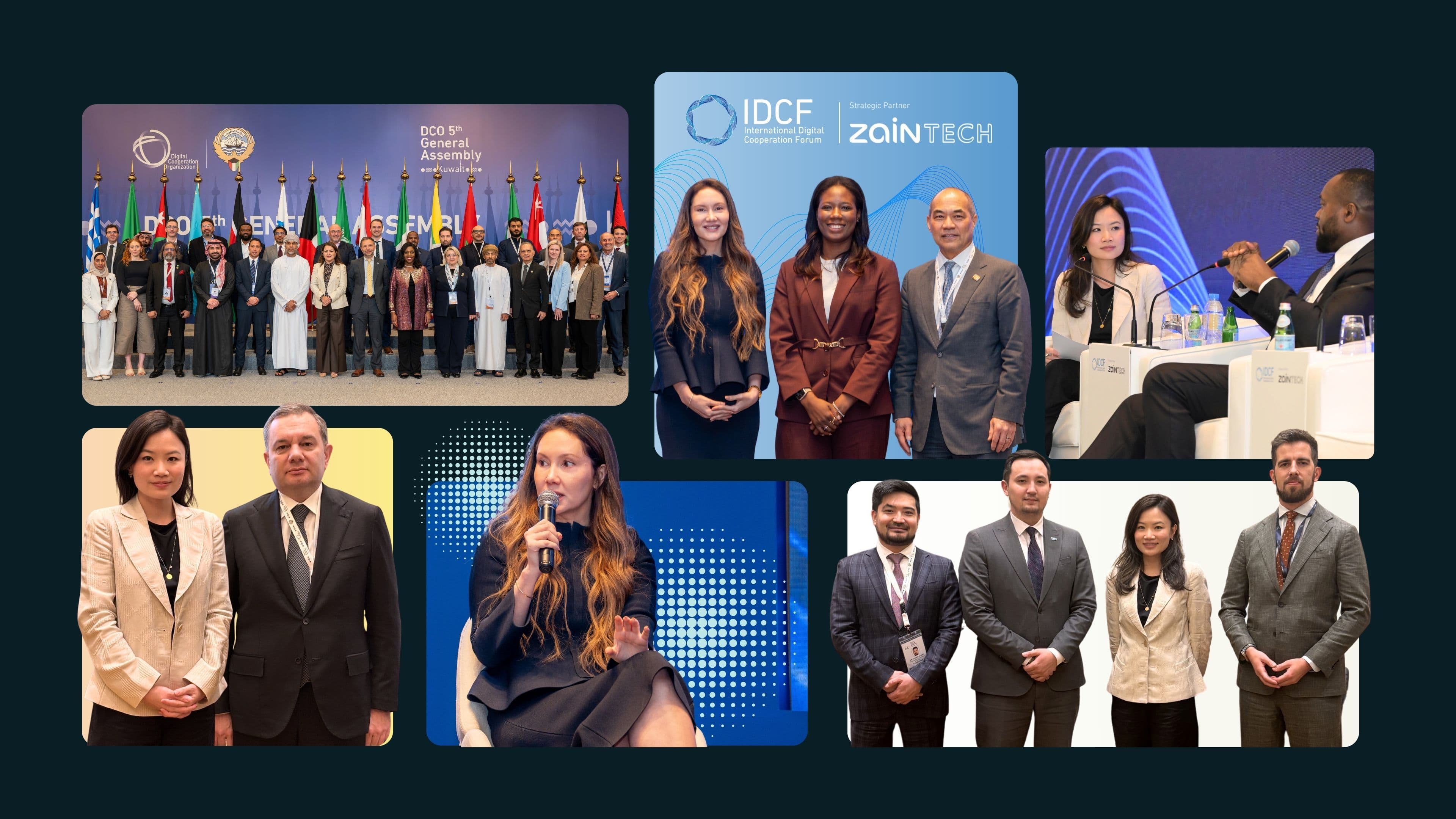
As governments accelerate efforts to embed artificial intelligence into national development strategies and economic diversification plans, the Digital Cooperation Organization (DCO) General Assembly has emerged as a platform for shaping how digital cooperation translates into long-term economic transformation. At the 5th DCO General Assembly in Kuwait, alongside the International Digital Cooperation Forum (IDCF), 500 Global participated for the third consecutive year as an Observer — engaging alongside ministers, regulators, multilateral partners, and ecosystem leaders focused on moving from digital ambition to national capability.
In just over five years, under the leadership of Secretary-General Deemah AlYahya and its member states, the DCO has positioned itself as a pivotal resource for advancing digital cooperation, AI governance, and cross-border digital infrastructure development. What stood out this year was the seriousness of intent. The conversation has shifted decisively — from exploring digital opportunity to building sovereign capability.
Across ministerial roundtables and observer sessions, discussions centered not on whether AI matters, but on how to operationalize it through credible national AI strategies. AI compute infrastructure, capital mobilization, talent development, regulatory governance, and cross-border trust are now understood as interconnected pillars of AI readiness. For many DCO member states — particularly across emerging and growth markets — digital transformation is embedded within economic diversification agendas, productivity strategies, and long-term development planning.
For these countries, AI readiness is inseparable from economic sovereignty.
From National AI Vision to Implementation
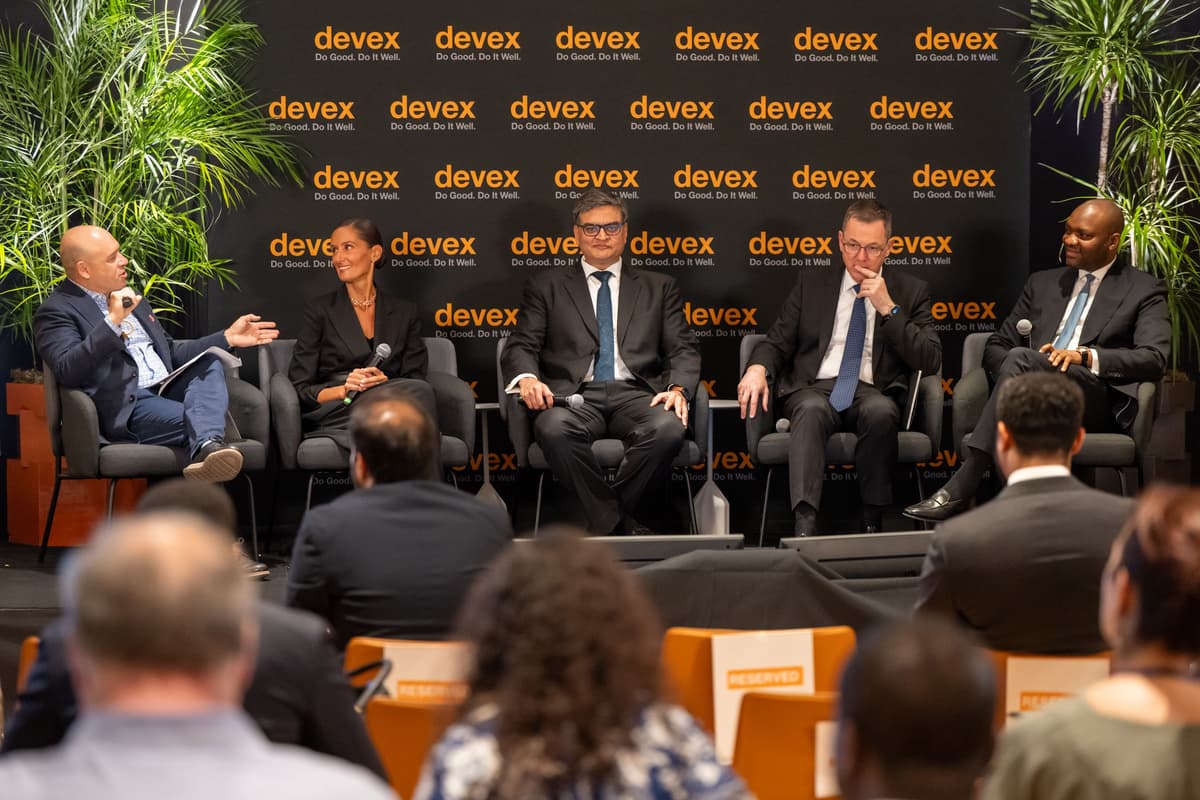
At the General Assembly, 500 Global convened a strategic side session focused on a central question: how can governments move from AI ambition to national execution?
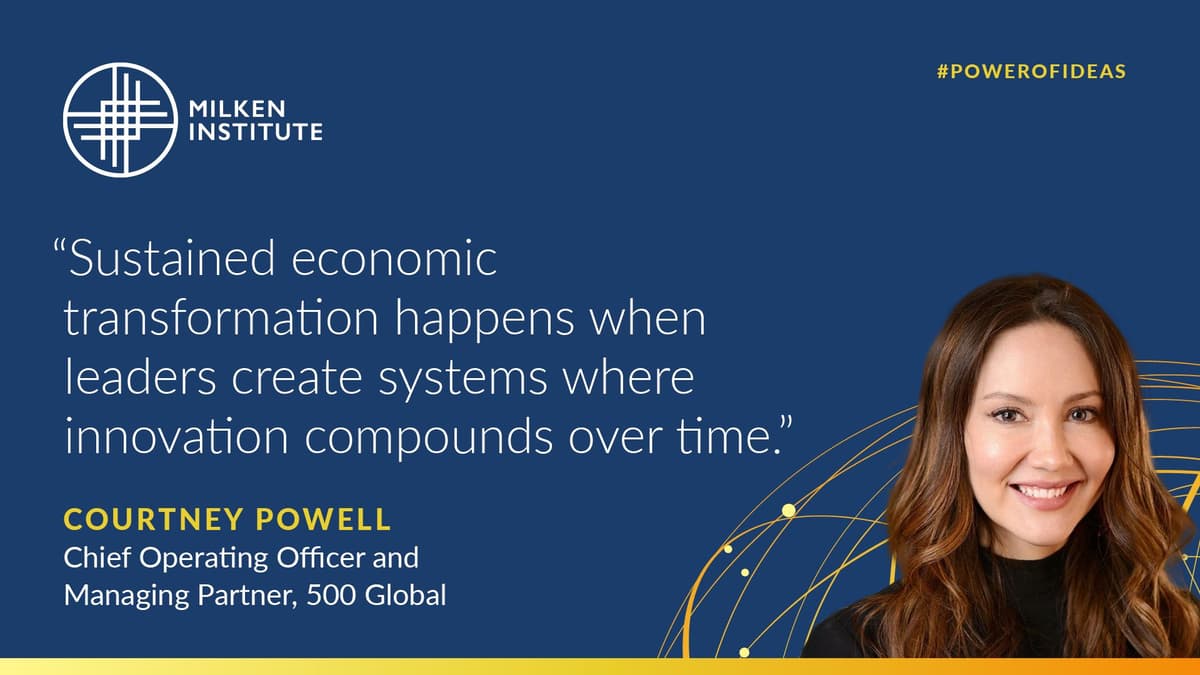
Featuring Kate Kallot (Founder & CEO, Amini; TIME100 Most Influential in AI), Alex Wong (Senior Advisor to the Secretary-General, ITU), and Courtney Powell (COO & Managing Partner, 500 Global), the panel explored practical approaches to building domestic AI ecosystems. Discussions focused on defining credible compute strategies, structuring capital mobilization frameworks, and designing public–private partnerships that strengthen local enterprise development rather than deepen long-term vendor dependency.
The session emphasized that sustainable AI ecosystems require coordinated policy, financing, infrastructure investment, and institutional capacity — not isolated pilots or externally driven deployments.
Complementing this, Mei Chel Tan (Managing Partner, 500 Global) moderated a fireside conversation with H.E. Dr. Bosun Tijani, Nigeria’s Minister of Communications, Innovation and Digital Economy. Grounded in the DCO AI-REAL Toolkit — a framework for assessing national AI readiness across governance, infrastructure, talent, and ecosystem development — the conversation examined how Nigeria is translating its national AI strategy into practical implementation. From talent development and digital infrastructure expansion to structured public–private collaboration, the discussion underscored the importance of aligning AI adoption with broader economic and institutional reform.
Together, these sessions reinforced a clear message: durable AI capability requires systems-level coordination that connects policy, capital, talent, and infrastructure.
Aligning Capital with National Development Priorities
This theme — execution over aspiration — also defines how we approach our work across DCO member states.
Between the 4th and 5th editions of the DCO General Assembly, 500 Global launched the Sustainable Innovation Program — designed to support early-stage founders building technology-driven solutions across agriculture, mobility, energy, and the built environment. The program aligns private capital with national sustainable development priorities, supporting SME growth, climate resilience, and digital inclusion.
We reviewed more than 600 applications for the inaugural cohort, with over a third originating from DCO member states, including Nigeria, The Gambia, Ghana, Morocco, and Rwanda. Notably, 20% of the selected cohort came from Nigeria — a strong signal of entrepreneurial momentum across the DCO ecosystem.
One example is Moon Innovations, a Nigeria-based company building AI-powered Solar Utility Boxes that integrate clean energy, internet connectivity, and smart security systems. Deployed across more than 50 sites — including health centers, agricultural communities, and markets — these systems deliver reliable power and digital access to underserved populations. By 2027, Moon aims to scale to over 500 deployments, directly impacting more than 50,000 people.
This model demonstrates how early-stage capital formation can support decentralized digital infrastructure while expanding economic inclusion.
Supporting National Digital Strategies: Morocco and Saudi Arabia
Our work increasingly includes structured implementation partnerships aligned directly with sovereign digital strategies.
In Morocco, 500 Global was selected as an operator under the government’s Startup.vb Initiative, a cornerstone of the National Digital Strategy 2030. The initiative aims to strengthen Morocco’s innovation capacity and digital competitiveness by accelerating high-potential founders and building clear pathways from training to financing and global scale.
Beyond founder support, the program contributes to pipeline development, domestic capital formation, and institutional capacity building — all critical components of long-term economic competitiveness. As an implementation partner, 500 Global supports structured founder development, ecosystem financing pathways, and global network access that align entrepreneurship with Morocco’s national transformation agenda.
This reflects a broader shift: governments are increasingly co-designing sovereign-aligned ecosystem platforms that connect entrepreneurship, AI strategy, and sustainable economic growth.
This long-term, government-aligned model is not new for us. In 2026, we will mark ten years of ecosystem-building in Saudi Arabia — a partnership demonstrating the power of sustained public–private collaboration and long-term capital alignment.
Over the past decade, we have supported 82 Saudi-headquartered portfolio companies and accelerated more than 100 startups. Fifty-four percent have raised subsequent funding rounds following our initial investment, contributing to more than 11,000 jobs created since 2021. These outcomes support private sector development, SME expansion, and workforce participation aligned with national economic diversification strategies.
Sustained ecosystem development requires patient capital, institutional trust, and measurable economic outcomes.
Beyond Capital: Building AI Ecosystems as National Infrastructure
Throughout the DCO General Assembly and IDCF, one theme was clear: digital and AI ecosystems require more than capital injections. They demand institutional capacity, regulatory clarity, infrastructure investment, talent pipelines, and regional cooperation.
Both guest and member state examples illustrate this. Kazakhstan’s transformation of the 2017 Expo site into the Alem AI hub reflects an effort to anchor AI ambition in tangible national infrastructure. Morocco’s Jazari Root Institute similarly demonstrates ecosystem design grounded in institutional development and local capacity building. In Saudi Arabia, the establishment of the Saudi Data & AI Authority (SDAIA) and the rollout of national AI strategies signal a coordinated approach to embedding AI governance, data infrastructure, and talent development within broader economic diversification efforts. Rwanda’s continued investment in digital public infrastructure and innovation hubs underscores its commitment to building regionally connected, technology-enabled growth models that strengthen domestic entrepreneurship. Bahrain’s National Digital Economy Strategy 2030 further illustrates how member states are formalizing AI and digital transformation roadmaps to enhance competitiveness, modernize government services, and future-proof their workforce.
Digital transformation must be domestically grounded to be globally competitive.
New Financial Architectures
In response to this evolving landscape, 500 Global recently formalized its Sustainable Growth practice — designed to align sovereign development priorities with innovation investment platforms.
Globally, public development goals and private capital pools often target the same outcomes — job creation, SME growth, climate resilience, digital inclusion, and economic competitiveness — yet lack structured mechanisms for alignment.
The Sustainable Growth practice bridges this gap by combining global ecosystem development experience with venture investing to design sovereign-aligned strategies, blended finance mechanisms, catalytic capital structures, and scalable co-investment platforms. Our objective is to support governments, sovereign institutions, and development finance partners in translating national AI strategies and economic priorities into investable, durable ecosystems.
For governments, sovereign wealth funds, and development finance institutions, the opportunity is clear: align national AI strategies with structured capital, ecosystem development, and regional cooperation mechanisms that ensure long-term domestic capability.
The Next Phase of Digital Cooperation
Our participation at the 5th DCO General Assembly and IDCF reaffirmed that the next phase of digital cooperation will be defined not by policy declarations alone, but by implementation — measurable, inclusive, and built for sustained economic transformation.
Across emerging and growth markets, AI is becoming embedded within national development strategies. The shift from ambition to capability is well underway.
We are grateful to stand alongside DCO member states and global partners as we collectively build digital economies that are resilient, sovereign-aligned, and designed for long-term growth.